
Kobe and the Web of Life
Learn more about biodiversity
- What biodiversity means
- How living things depend on each other
- Why bees and other pollinators matter
- How planting indigenous trees helps
There are no bees in the school garden, and Amani wants to know why. Kobe, a wise old leopard tortoise, shows her and Otieno the glowing web that joins every living thing, then flies them over Kenya’s wild places to see why each thread matters.
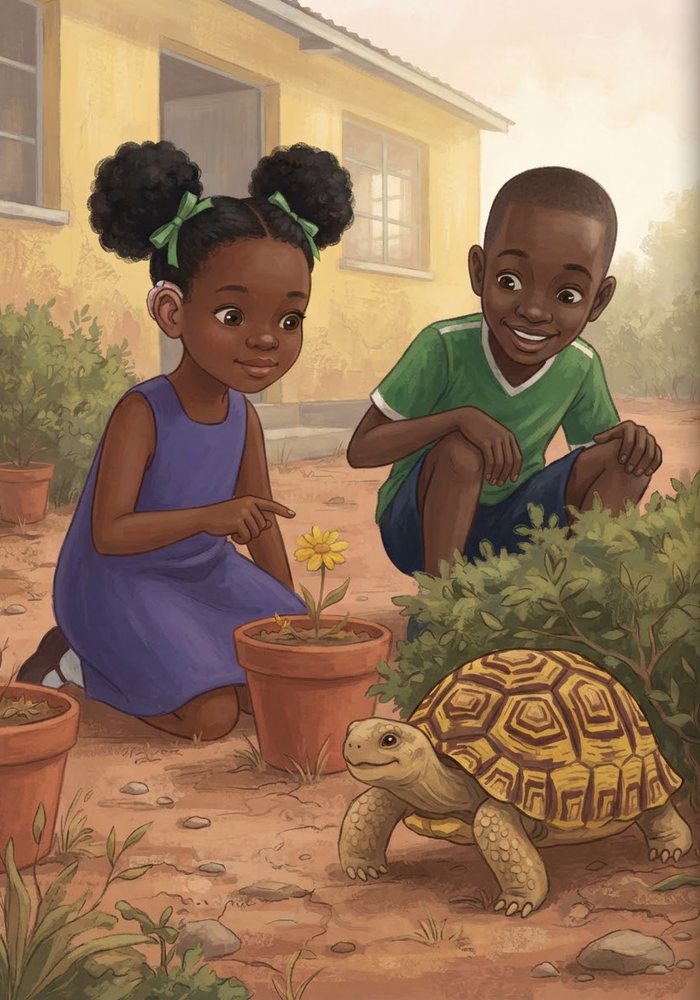
The school garden was quiet and mostly dry. Seven-year-old Amani knelt by a dusty flowerpot. “Look, Otieno,” she whispered softly, pointing to a small yellow blossom. “There are no bees today.” Otieno leaned down to see. Nearby, under a low bush, something moved very slowly. It was a big leopard tortoise! “Hello,” said the creature in a gentle voice. “My name is Kobe.”
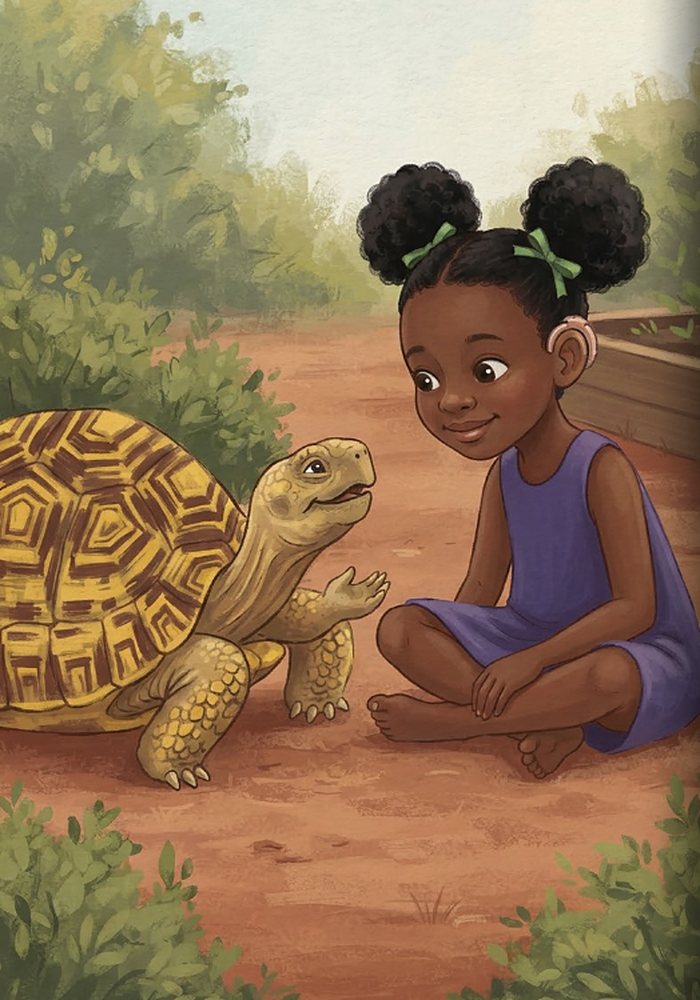
Kobe blinked his kind, wrinkly eyes. He had lived in the garden for many, many years. “Do you know what biodiversity is?” Kobe asked gently. Amani shook her head. “Biodiversity means all the different kinds of living things on Earth—plants, animals, insects, tiny microbes, and the places where they live. We are all part of one big, wonderful family.”
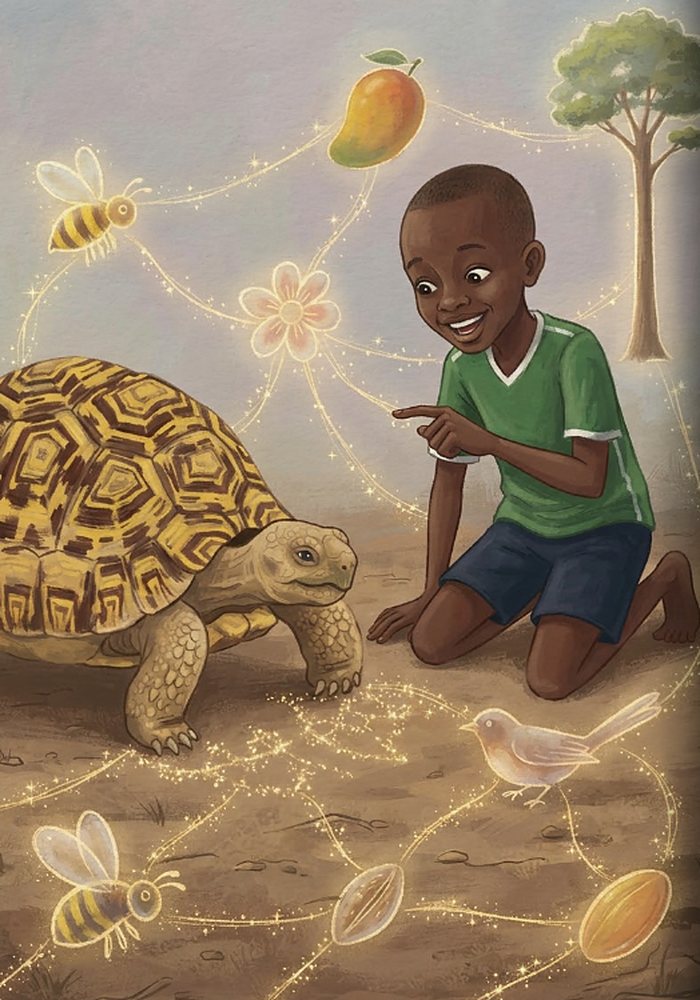
Kobe slowly extended a claw and drew a circle in the dry dirt. Magically, bright glowing lines began to sparkle in the soil! The light connected pictures of a fuzzy bee, a flower, a juicy mango, a small bird, a seed, and a tall tree. “Living things depend on each other, just like threads in a web,” Kobe explained. “When one thread breaks, others are affected.”
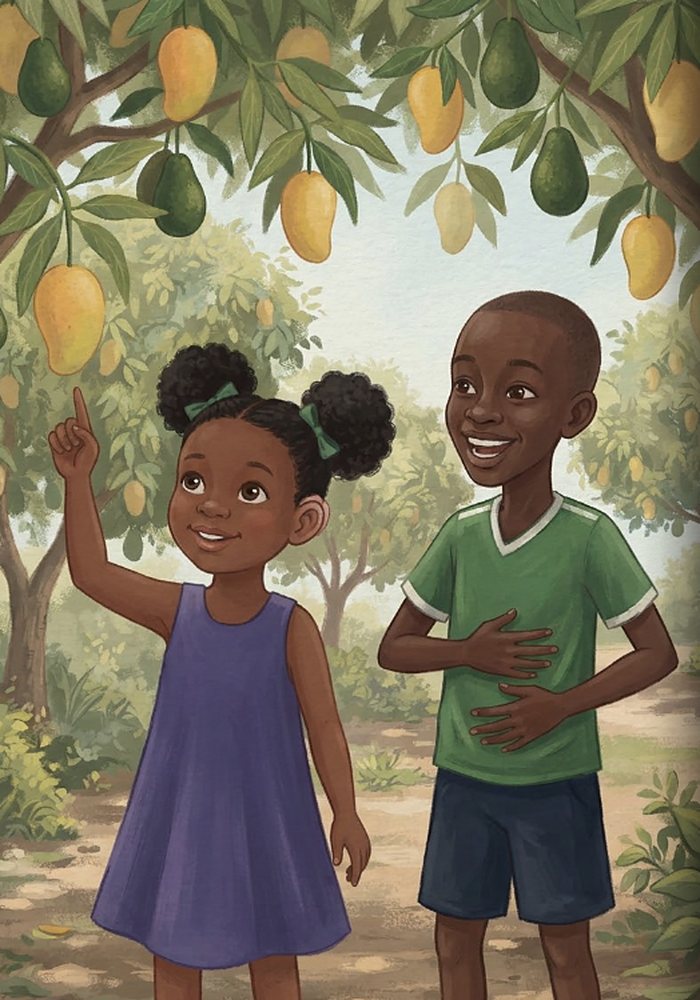
“Bees and other pollinators carry pollen from flower to flower,” Kobe said. “This helps plants make fruits and seeds, such as delicious mangoes and avocados.” Amani smiled as she imagined plump fruits hanging from leafy branches. Nearby, Otieno touched his tummy as it gave a loud rumble. “I love mangoes!” he cheered.
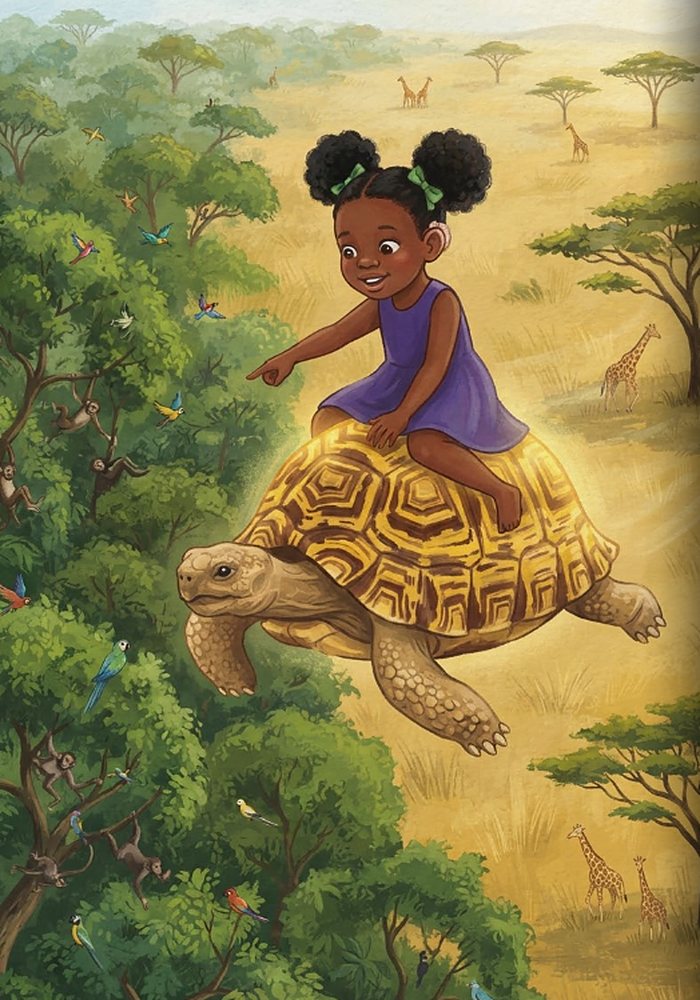
Suddenly, Kobe’s shell began to glow. In their imagination, his shell grew into a giant flying boat! Whoosh! Amani and Otieno soared high into the sky. Below them, tall giraffes nibbled acacia leaves on the sunny savannah. Soon, they glided into the lush green msitu—the famous Kakamega Forest—where monkeys swung through thick trees and colourful birds sang.
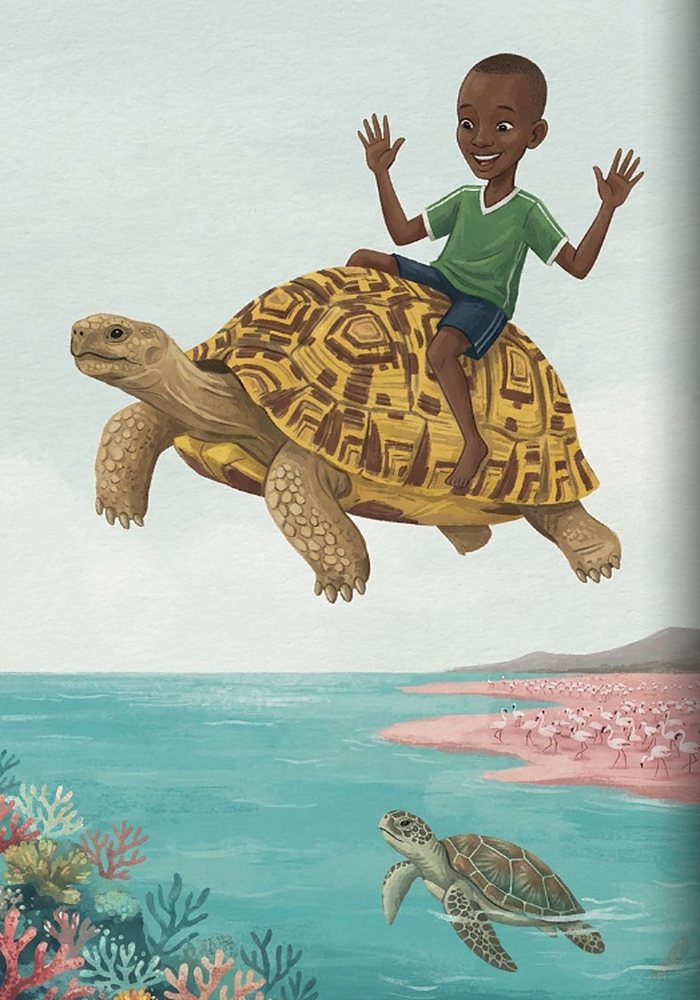
Next, the magic shell flew over Lake Nakuru, where thousands of pink flamingos splashed in the water. Then they zoomed all the way to the bright coral reef at Watamu on the coast! Looking down through the clear waves, they saw colorful fish swimming and a sea turtle gliding by. Otieno cheered out loud, “Kenya has so many amazing wild places!”
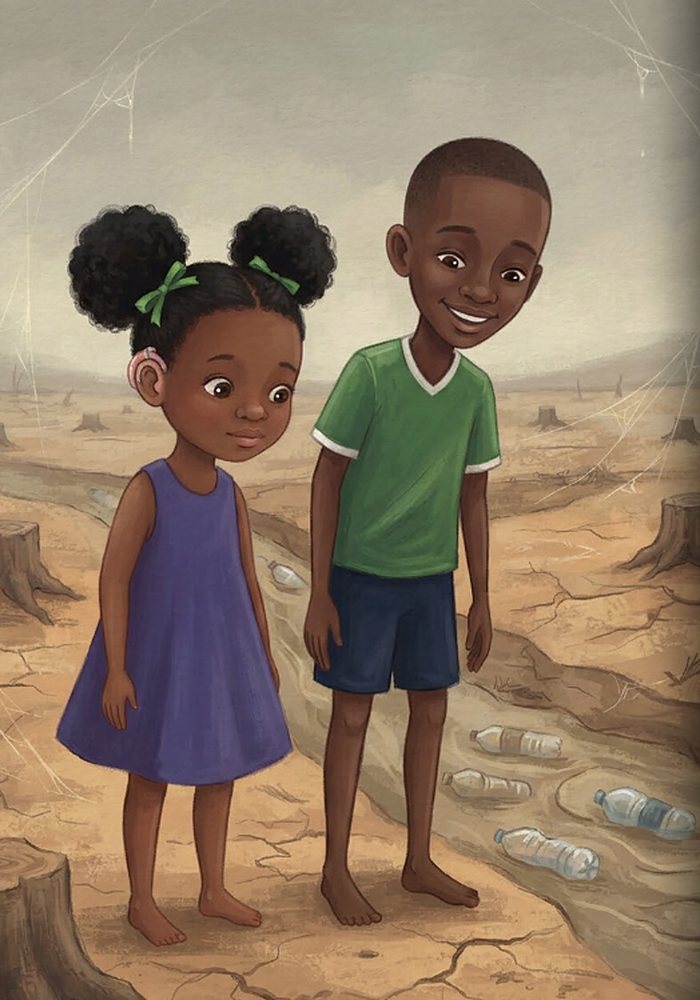
But then, the glowing web showed a sadder picture. Gently, the children saw what harms the web: a cut-down forest, plastic rubbish in a river, and dry, hot land caused by climate change. A few of the glowing threads snapped and faded away. “When wild places are harmed, the web of life grows weaker,” Kobe said softly.
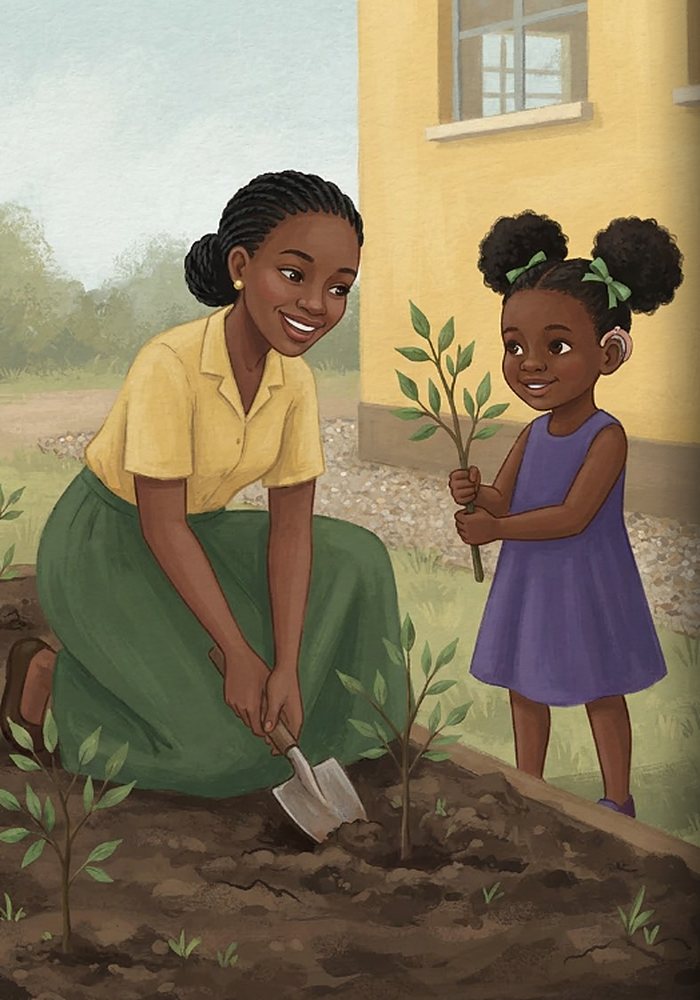
Amani touched her hearing aid and thought carefully. “We can fix the threads!” she exclaimed. They ran to find their teacher. Smiling warmly, their teacher clapped her hands. “What a wonderful idea!” she said. Together, the class gathered small spades to plant native indigenous trees and a bright patch of flowers for the bees.
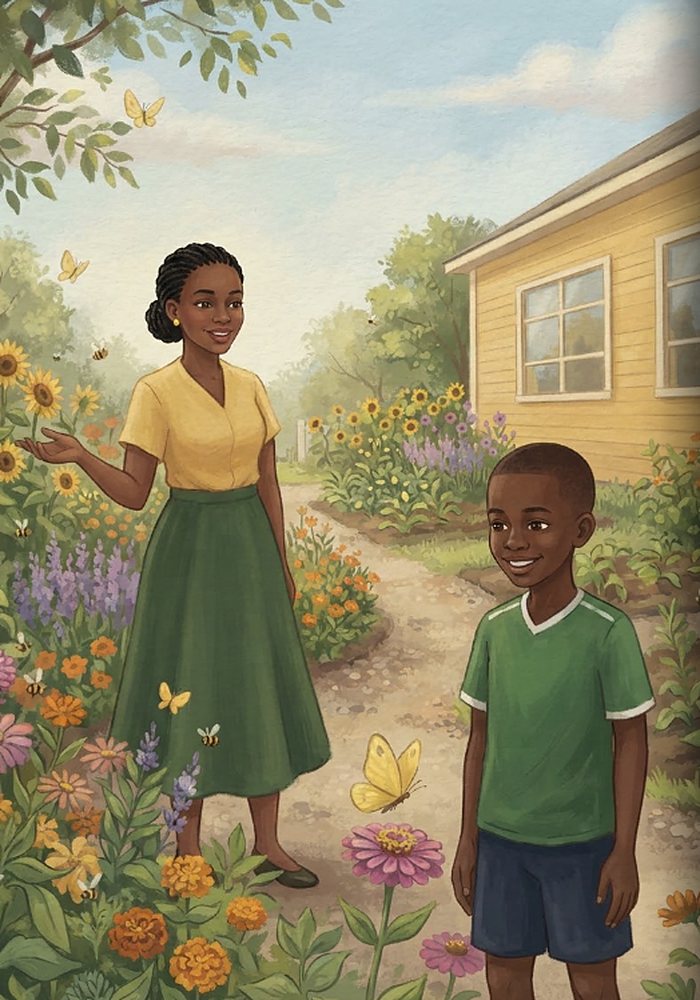
Weeks later, the school garden buzzed with busy bees, butterflies, and singing birds. Their teacher gathered the class together in the shade. “Did you know Kenya plans to grow 15 billion trees by 2032?” she shared proudly. “Planting indigenous trees and flowers gives animals and insects food and homes. Every single tree counts!”
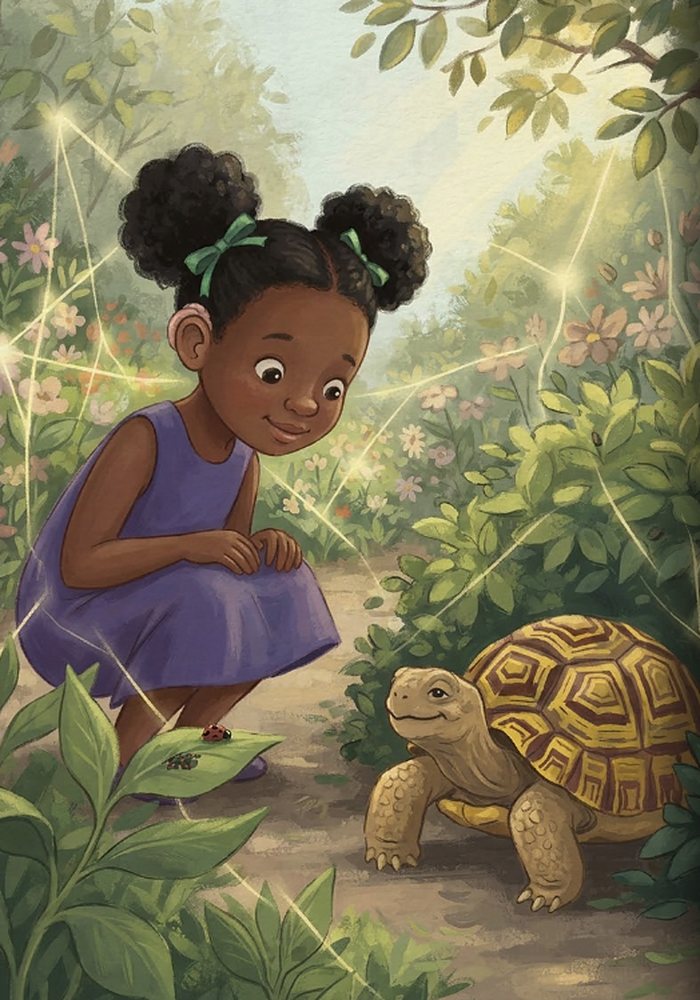
Amani bent down low and spotted a tiny red ladybird resting on a leaf. Under the shade of a new bush, Kobe smiled his slow, wise smile. The web of life was glowing strong once more.


